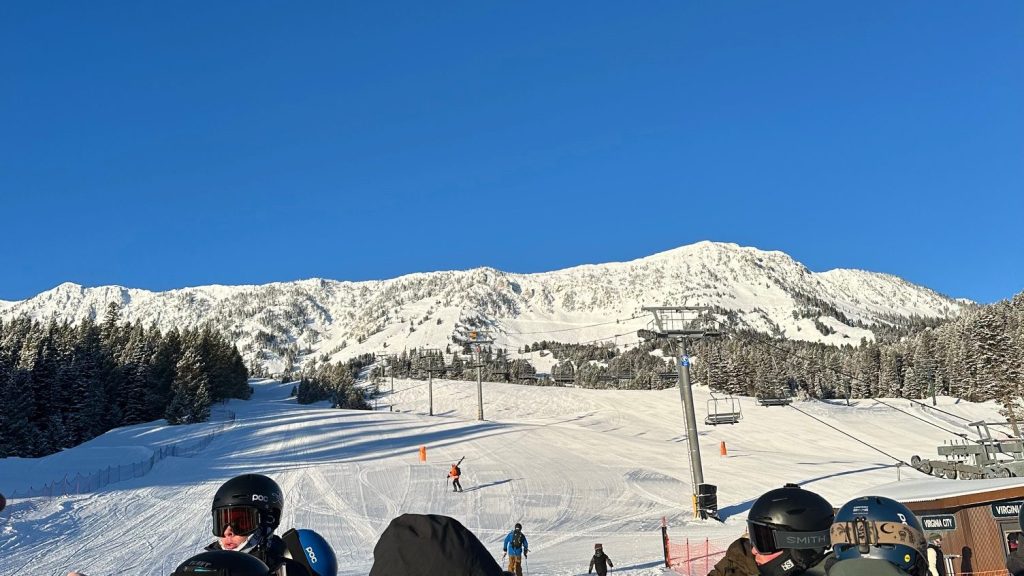
This will be a short post, so I apologize in advance, but I assure you it will still be worthwhile! Jake and I visited Bridger Bowl this weekend, and it was quite busy. The weather was sunny with little wind which made for an ideal day for nearly everyone. However, the downside of a perfect ski day on the weekend is dealing with the lines.
While we were waiting to board the chair lift, we observed a medic accompanied by a dog ascending the ski lift. We figured that the dog was in training for locating individuals buried in avalanches. Later in the day, we took a chair lift with another medic, and I seized the opportunity to inquire about the dogs.
The history of avalanche dogs dates back to 1937, the first documented rescue occurred, involving an untrained dog who successfully tracked an individual buried in an avalanche. This initiated movement to utilize these dogs’ courageous spirits and keen sense of smell as a component of avalanche search and rescue operations.
The information we learned was absolutely fascinating.
The ski patrol rescue dogs!
Most ski resorts in the western regions employ canine staff, consisting of highly trained rescue dogs. These dogs utilize their speed, agility on snow, and sense of smell to locate buried avalanche victims more swiftly than other known.
They begin training at very young age and undergo approximately two to three years of training before becoming a fully trained rescue dog. They initially learn obedience training, which includes commands such as sit, stay, and running alongside the medic while skiing, etc.
Eventually, once they master that, they will practice burying a piece of clothing somewhere on the mountain, and the dog will have to sniff it out and then dig for it. They will also search for other ski patrol members who will dig a hole for dog to sniff out.
It is quite remarkable what these dogs are capable of. I inquired about the types of dogs they usually train, and he mentioned that it varies significantly. Smaller dogs, such as Labradors, are more agile on their feet but cannot dig as quickly as the larger breeds. Ski resorts have dogs of various sizes.
It is also quite remarkable that, as service animals, these dogs accompany their owners everywhere. Truly “man’s best friend.” He also mentioned the dogs are very friendly and quite popular with the children who are skiing.
It is just so cool what these dogs can accomplish; it also showcases their intelligence.
After we learned about the rescue dogs, Jake and I tackled a few black diamond trails. I was very proud of myself for attempting more challenging terrain, but I felt this was the right time to try. There was a significant amount of powder and moguls on a very steep slope, so I was confident that if I fell, it would not cause any injury.
I intended to challenge myself with more difficult terrain in preparation for our trip to Banff National Park next weekend. The mountain features numerous black diamond trails, and I anticipate that it will be more fun if I can tackle some of those routes.
Stay tuned for our trip to Banff National Park!
 Escaping the Everyday
Leave a comment