Another Sunday, another post!
Today, I will take you back to our visit to Badlands National Park from a few weeks ago. I realized that I never blogged about it, and it was too incredible not to revisit and recap the beauty.
We also spent the last couple of weekends at Bridger Bowl, so prepare yourself because both of these places are truly remarkable!
Bridger Bowl
Bridger Bowl, a nonprofit ski area, is proud to offer a genuine community-driven experience. All revenue generated is reinvested into the mountain, enhancing facilities, maintaining affordable lift tickets, and supporting local programs.
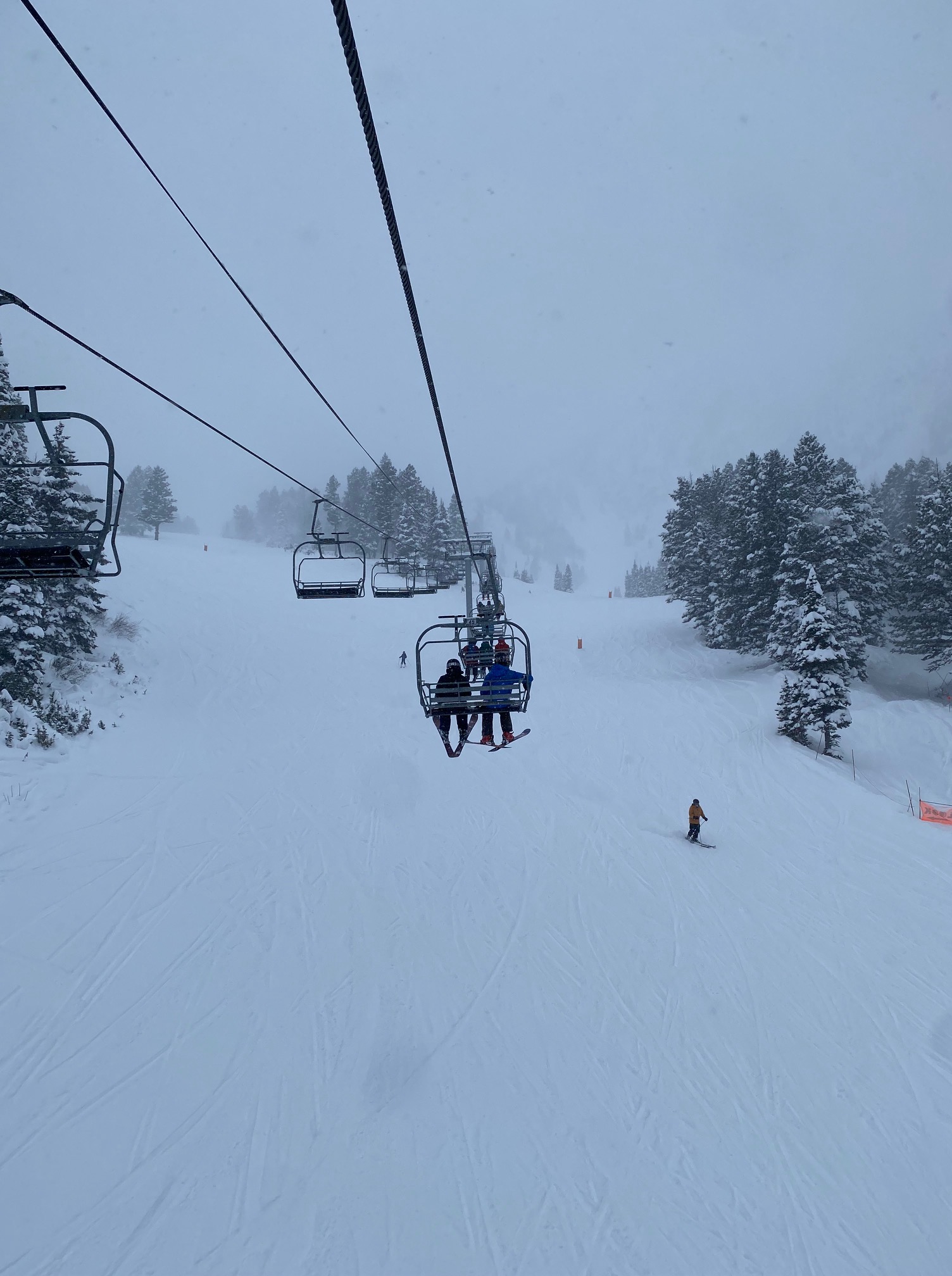
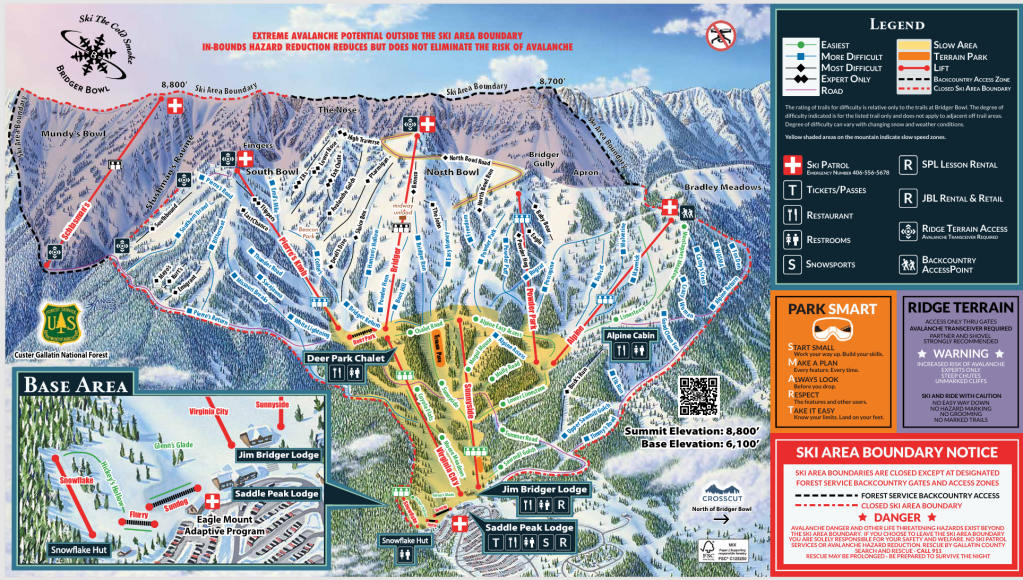
This resort offers 2,000 acres of skiable terrain with over 75 marked trails and numerous unmarked ones, serviced by 11 lifts. Bridger relies on snowfall for 95% of its skiable terrain, receiving approximately 300 inches of each season.
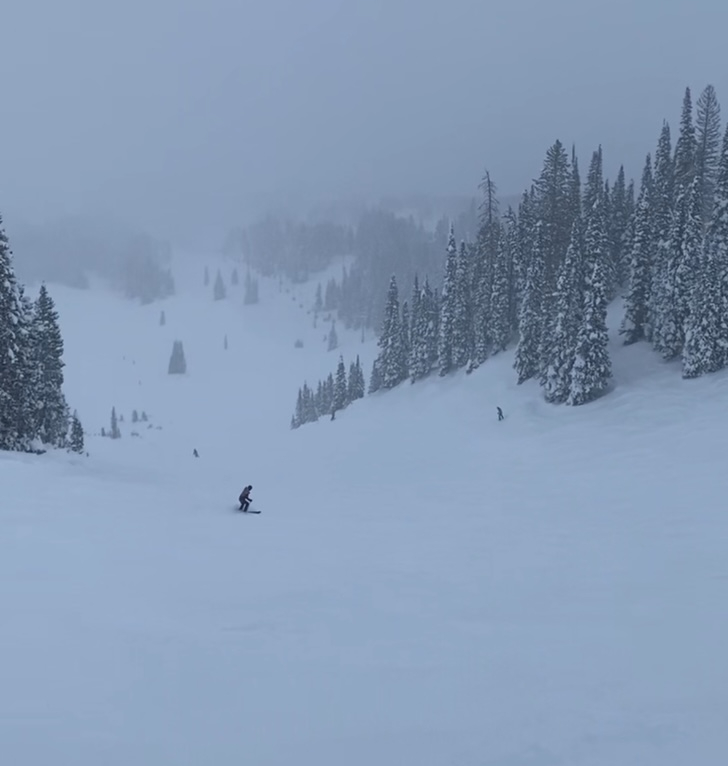
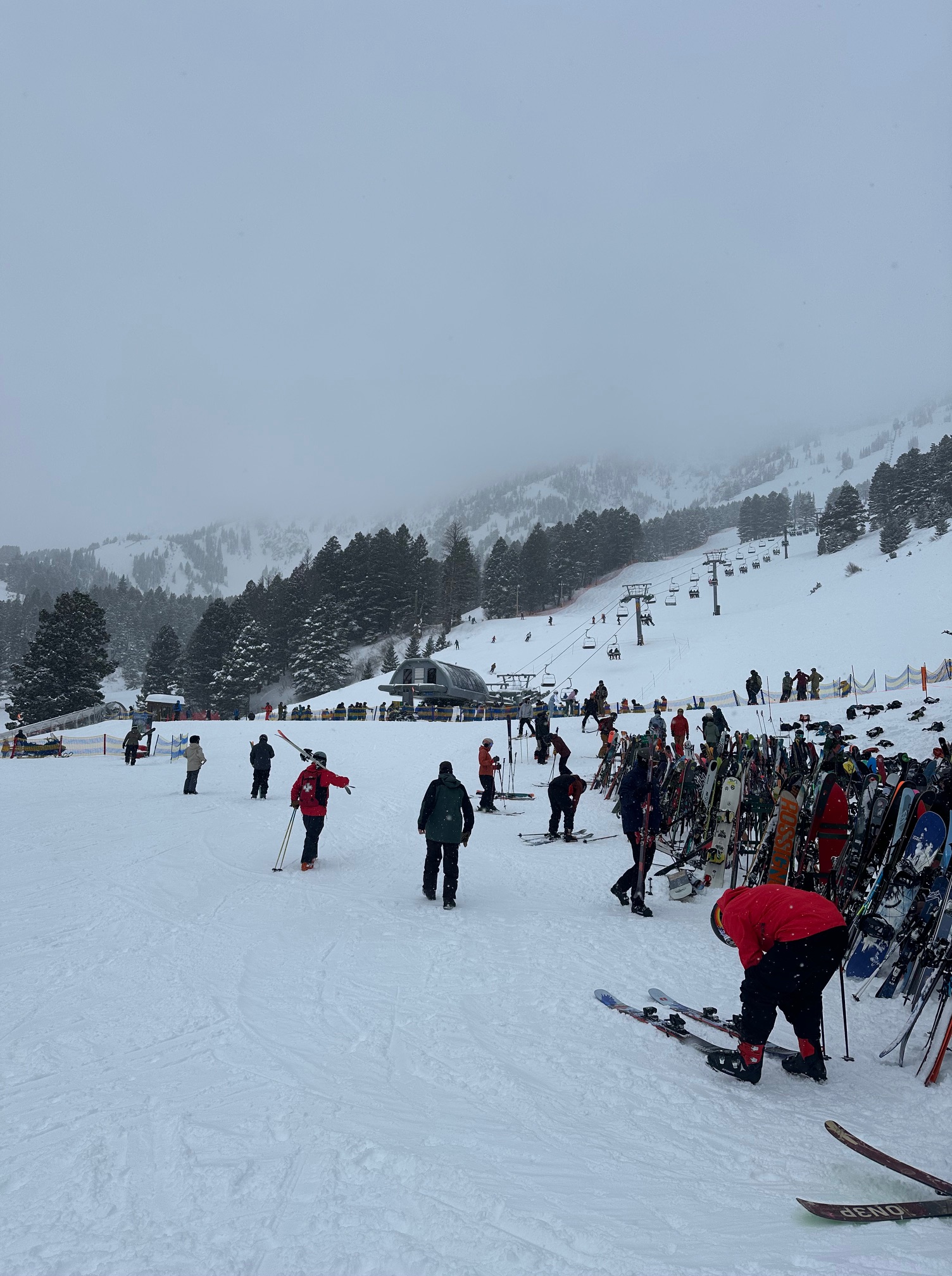
Although I greatly appreciate the snow conditions here, skiing in mountains here is quite chilly. When we visited Salt Lake City in November, it was not as cold on the mountain, but I believe the difference is due to it now being January. Bridger Bowl is also known for its windy conditions, which does not help when it is already cold. Every hour or so, I had to go inside and warm up before returning to the slopes.
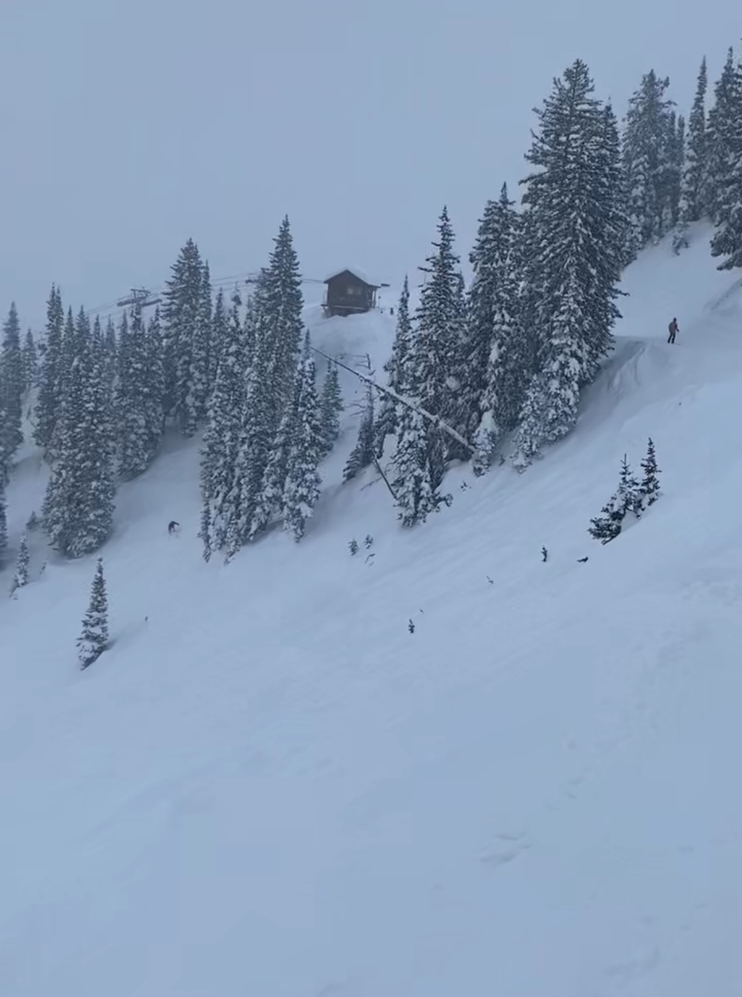
The temperatures were in the teens, and the wind chill made it even colder. Despite the frigid conditions, the powder was incredible! I had never skied in powder until this year. You wouldn’t think it would be much different on the muscles, but my legs were like jello by the end of the day! It got to the point where I would be going down a steep section and would just fall because my legs were so tired. Fortunately, it was all powder that day, so I wouldn’t get hurt. Eventually, I called it quits, and Jake said he was pretty sore too. You know it’s tough out there when Jake is sore!
There were sections of the mountain where there was approximately two feet of powder snow. In those areas, it felt as though one was skiing on clouds. Without powder skis, I had to ensure I leaned back slightly more than usual to prevent my tips from plunging into the powder. I learned this the hard when I completely ate it.
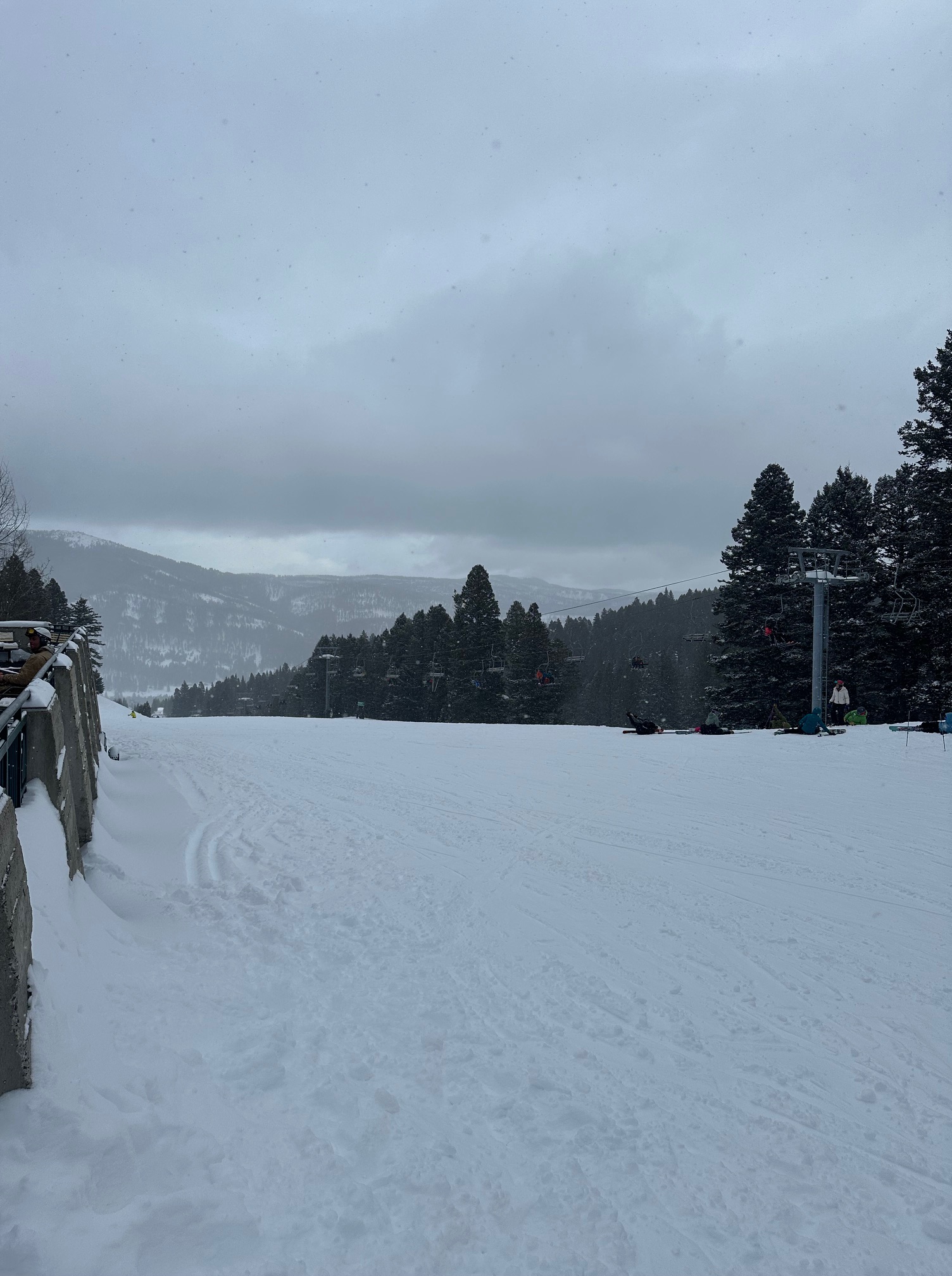
In one section, we were skiing through the trees, allowing us to forge our own path. The powder was so deep in that area that it caused Jake to come to a complete stop. There was no way I was going to venture over, as I would get stuck as well, or if I walked, my legs would sink right through. I threw Jake one of my ski poles, and he had to push himself back to a spot where he could start snowboarding down again.
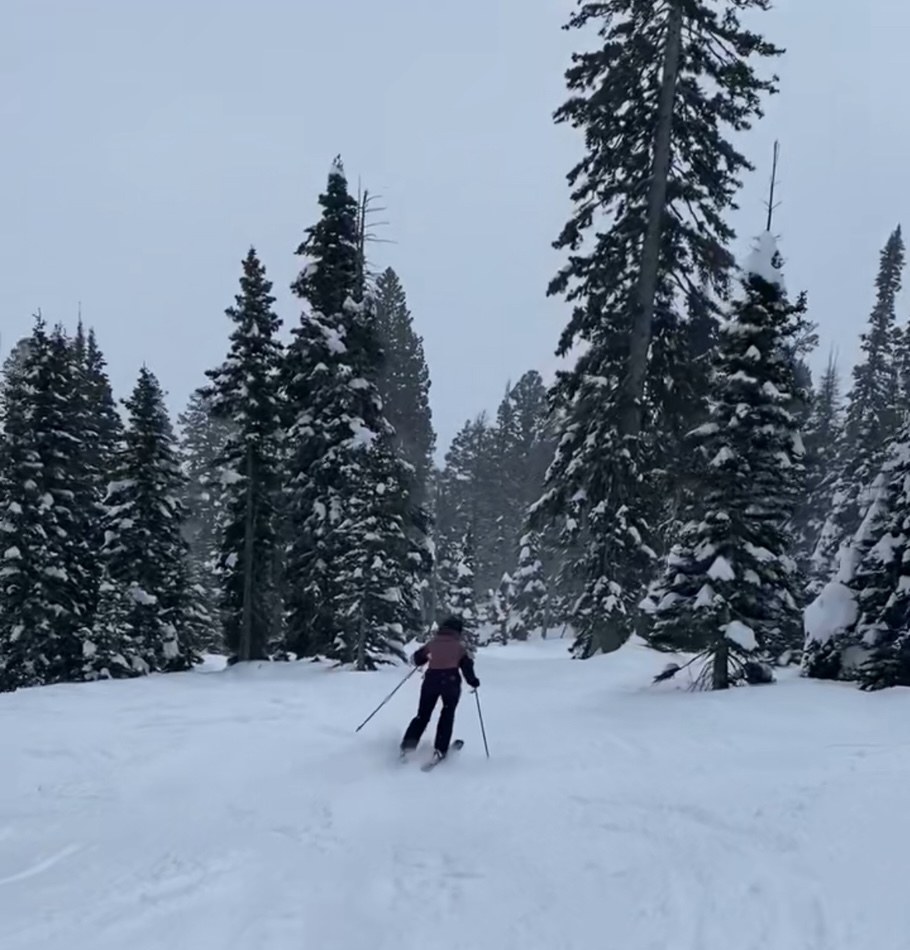
Skiing in these conditions can be highly enjoyable! The risk of injury from falls is reduced due to the snow, but one should not become complacent. Increased snowfall can create more hazards, such as tree wells and avalanches.
Every morning, ski patrol makes its way through the mountain to conduct avalanche control. They shut down sections of the mountain that are not safe and set off small explosions to produce an avalanche. When skiing in the morning, one can actually hear the loud bangs going off. There are actually sections of the mountain where it is required to wear a beacon in case of an unexpected avalanche. It sounds frightening, and well it is!
I do not anticipate venturing into that section in the near future. It requires a very high level of skiing expertise, and one must accompany someone who is knowledgeable and experienced. Essentially, it is a part of the mountain without marked trails, where you carve your own path down. It resembles backcountry skiing, but you remain within the ski area’s boundaries.
One thing that always helps Jake and me through the skiing months is our hand warmers. They are useful because we can place them in our gloves for skiing, as well as when we take Cassie to the dog park or engage in any outdoor activity where we need additional warmth.
If you’re in need of some hand warmers, check out my affiliate link below! As an Amazon Associate, I earn from qualifying purchases.
Affiliate Link Info
The Site may contain links to affiliate websites, and we receive an affiliate commission for any purchases made by you on the affiliate website using such links.
We are a participant in the Amazon Services LLC Associates Program, an affiliate advertising program designed to provide a means for us to earn advertising fees by linking to Amazon.com and affiliated websites.
Badlands National Park
Badlands National Park, located in southwestern South Dakota, boasts a rich history that spans millions of years. The area was initially inhabited by Native American tribes, including the Lakota, who referred to it as “mako sica” or “bad lands” due to its rugged terrain and extreme weather conditions. The park’s geological formations were formed over millions of years through the deposition and erosion of sediment rock layers.
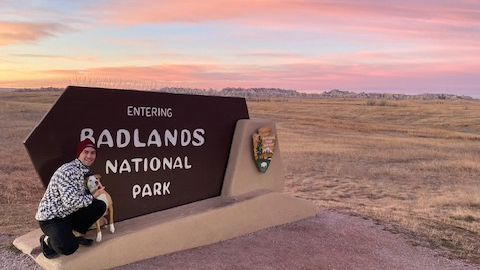
In the late 19th and early 20th centuries, the area became a focal point for paleologists due to its fossil beds. The park was established as a national monument in 1939 later designated a national park in 1978. This designation aimed to protect its unique geological features, fossil beds, and diverse ecosystems.
Badlands National Park covers an area of approximately 244,000 acres.
When Jake and I were driving back from Boston through South Dakota, we realized that there were not many gas stations along the way. Therefore, it is advisable to refuel whenever you come across one, regardless of how full your tank is. I saw a sign for a gas station and naturally pulled off, also noticing a sign for Badlands National Park. Jake was napping, but when I stopped the car to get out, he woke up. I jokingly said, “We’re going to Badlands National Park!” and immediately followed with “just kidding.”
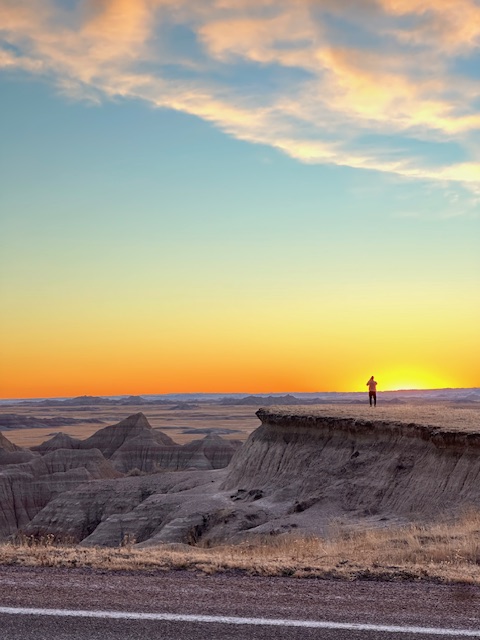
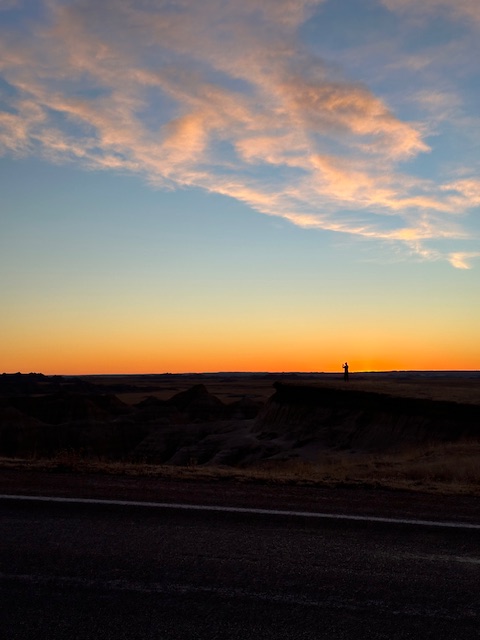
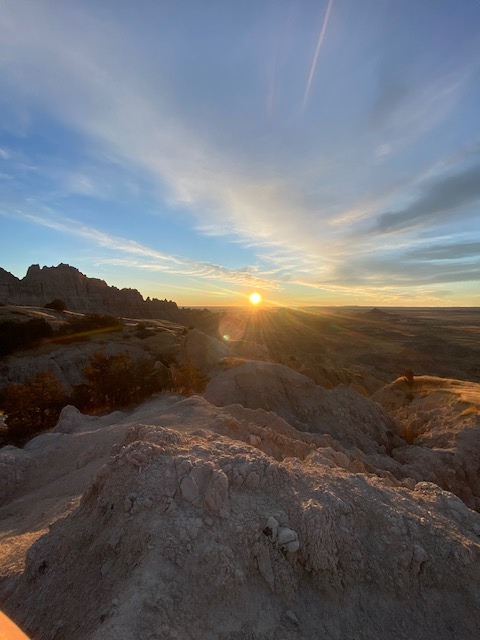
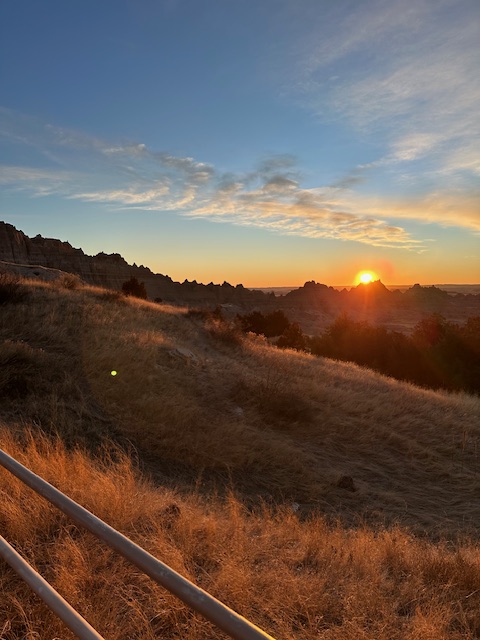
While I was refueling, Jake mentioned, “You know, the park is only 10 minutes away.” Despite my desire to return home after driving for over 24 hours, we recognized that this was likely a once-in-a-lifetime opportunity to visit the national park, as there was no way we would choose to visit South Dakota during our free time. There is not much to see there, and the weather is chilly in the winter.
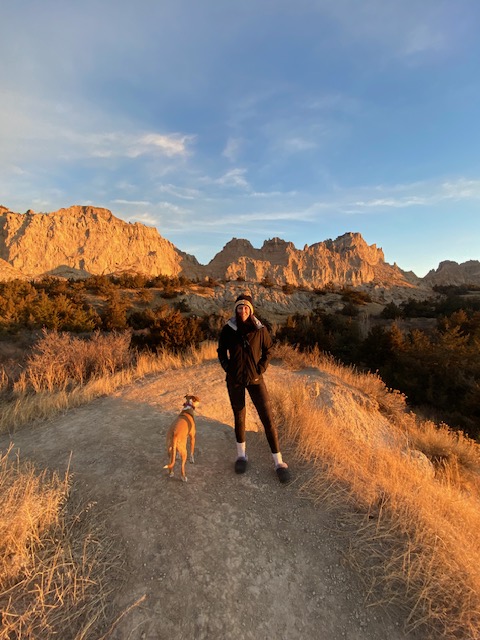
We embarked on a journey to the national park, and we were fortunate to witness it at sunrise, which was truly remarkable. Experiencing the park at sunrise perfectly encapsulated its beauty.

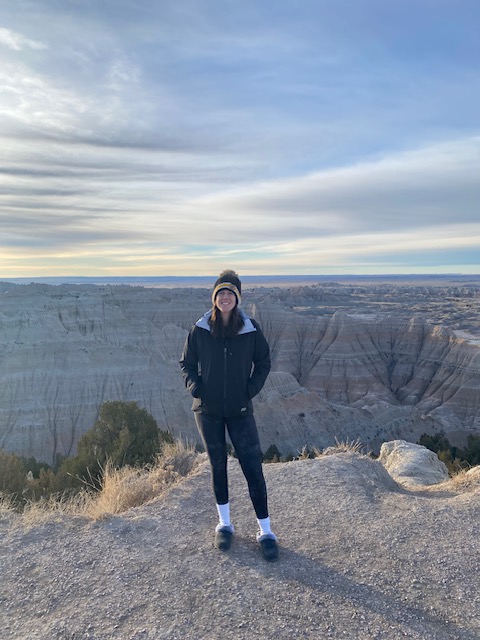
Certain trails prohibited dogs to the high presence of rattlesnakes. Based on our research in Bozeman, we understood that rattlesnakes are generally not active when temperatures are below freezing. Consequently, we felt comfortable taking Cassie for a brief walk. We were the only ones walking around, likely because it was so early in the morning.
The park offers numerous hiking trails and campsites for visitors to enjoy. Additionally, there are charming cabins available for rent within the park. It appears to be an extremely popular destination during the warmer months.
It was an extraordinary experience, and I am so happy we decided to visit. If you are ever going through South Dakota, be sure stop and see it. It is not like anything I have encountered before!
It appears that each week, I am uncertain about the plans for the upcoming weekend, so I cannot provide a sneak peek. However, considering it is a long holiday weekend, I am confident we will find something exciting to do.
Stay tuned for more adventures!
 Escaping the Everyday
Leave a comment